During turtle nesting season, which typically occurs from late May through July, various species of turtles leave the relative safety of their aquatic, wetland, and upland habitats in search of suitable areas to nest that are crucial for producing the next generation. Some turtle species can lay more than one hundred eggs in a single clutch, while others may produce multiple clutches during a single nesting season. However, many traditional or preferred nesting areas are separated from these habitats by roadways and other manmade obstacles, increasing the risk of injury or mortality. McCormick Taylor makes consideration of these species, as well as other wildlife, a priority when planning and designing projects.
Our expert field scientists and wildlife surveyors utilize their expertise to gather and provide the data needed to minimize or avoid impacts on local ecosystems. One such expert is Bo Petrillo, MNR, PWS, CE, Natural Resources Manager and Qualified Bog Turtle Surveyor (QBTS). We asked Bo to explain the details of turtle nesting season and discuss how infrastructure affects turtles, and describe safeguards that can be incorporated into projects to help protect them during this critical period in their life cycle.
About Turtle Nesting Season and Related Considerations
What is the duration of nesting season?
In the northeastern United States, turtle nesting season generally occurs from mid-May through early July, with peak nesting activity typically occurring during late May and June. The exact timing varies depending on the species, weather conditions, and location (nesting season typically starts later the farther north you go).
During this time, female turtles leave wetlands, streams, ponds, or adjacent upland habitats to seek suitable nesting areas with well-drained soils and adequate sun exposure. This often brings them onto roadways as they attempt to cross in search of suitable locations to lay their eggs.
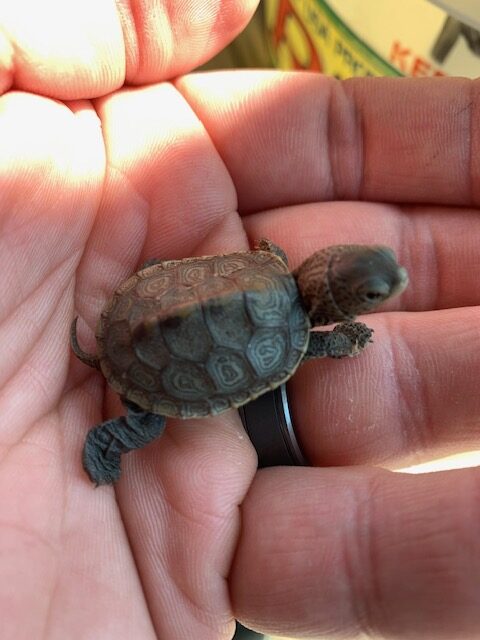
In New Jersey, one of the species we work with is the diamondback terrapin. These turtles live in saline marshes and often end up on roadways not because they are crossing to reach better habitat, but because they are searching for nesting areas above mean high water. In some locations, the causeways crossing the marshes provide the only suitable nesting habitat available.
How does nesting season affect infrastructure projects, and how can infrastructure projects affect nesting season?
Due to increased movement during nesting season, turtles are more likely to enter areas they would not typically occupy during the rest of the year. On active construction projects, female turtles searching for nesting sites may enter work zones, increasing the risk of injury or mortality.
Additionally, if eggs are laid within construction areas, they may have a reduced chance of survival due to grading, excavation, paving, or other ground-disturbing activities.
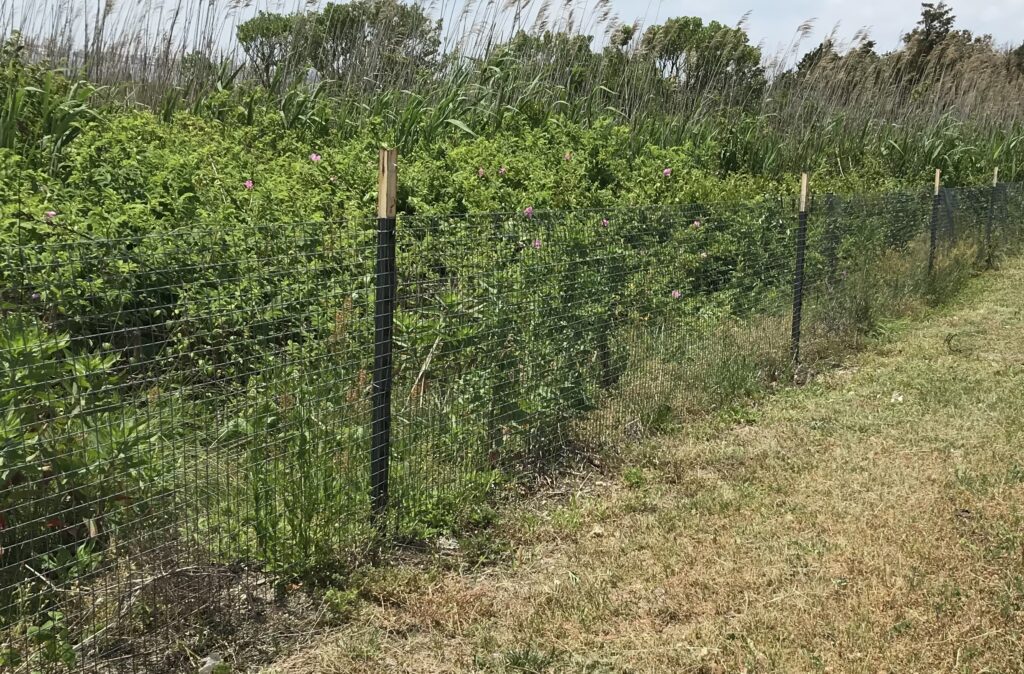
Nesting season is also a time when turtles frequently enter roadways. If a roadway bisects or is adjacent to suitable habitat, turtles may attempt to cross while searching for nesting areas. This often results in vehicle collisions and elevated rates of turtle mortality. During the planning and design phases of infrastructure projects, we try to consider the needs of turtles and other wildlife. This can result in the incorporation of turtle-specific design features intended to reduce road mortality. Examples include exclusion fencing that prevents turtles from accessing roadways and wildlife crossings beneath roads that provide safe passage between habitats.
Strategies for Minimizing Turtle Impacts
Can you tell us about a current project you are working on?
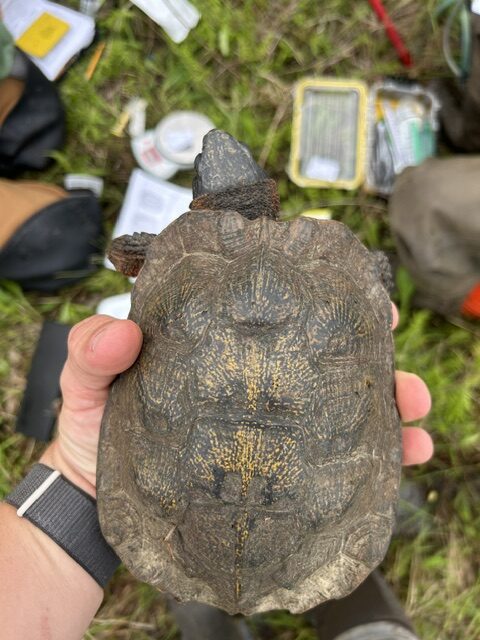
Currently, I am working on multiple projects that are actively being designed to help protect turtles. One bridge reconstruction project incorporates exclusion fencing adjacent to the roadway that directs turtles toward a specially designed shelf beneath the bridge. This feature facilitates safe crossings for the State-threatened wood turtle while keeping them off the roadway. Projects like this often arise as part of environmental permitting requirements in New Jersey and are becoming increasingly common.
We are also working on a standalone project that is not tied to a permitting requirement. For this project, we are designing approximately 2.2 miles of exclusion fencing along a coastal causeway to prevent diamondback terrapins from accessing the roadway during nesting season. The goal is to significantly reduce vehicle-related mortality while maintaining connectivity between marsh habitats and suitable nesting areas.