I-695 at I-70 (Triple Bridges) Public Involvement
McCormick Taylor implemented inclusive, multilingual public engagement strategies to ensure broad community participation through digital surveys, accessible materials, and interactive tools, while providing full project support from management to final reporting.
The Challenge
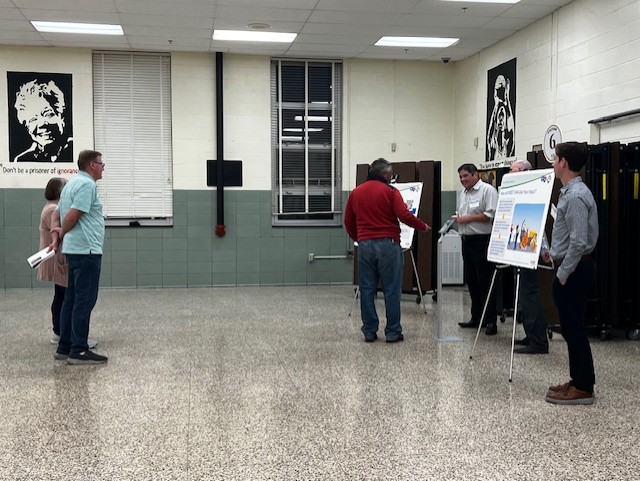
The I-695/I-70 Triple Bridges Interchange in Baltimore County, Maryland, is a critical transportation hub connecting two major regional corridors. Originally constructed in the 1960s, the interchange now carries significantly more traffic than it was designed to accommodate, resulting in congestion, delays, and operational challenges. As plans moved forward to replace all bridges within the interchange and improve mobility, it was essential to engage the public early in the Design-Build process to gather meaningful input on both project priorities and the aesthetic character of the replacement structures and surrounding landscape. At the same time, the project team needed to ensure that engagement opportunities were accessible and inclusive, particularly for underserved and vulnerable populations.
How We Helped
McCormick Taylor developed and implemented a comprehensive public engagement program that combined Environmental Justice (EJ) analysis, innovative digital tools, and targeted outreach strategies to ensure broad community participation throughout the project.Our team conducted an EJ analysis and mapping effort to identify potential barriers to participation and tailor outreach strategies to reach traditionally underserved communities. During the COVID-19 pandemic, engagement activities were adapted to meet social distancing requirements through a variety of digital communications, including e-newsletters, website content, social media campaigns, infographics, videos, virtual public meetings, and online presentations.
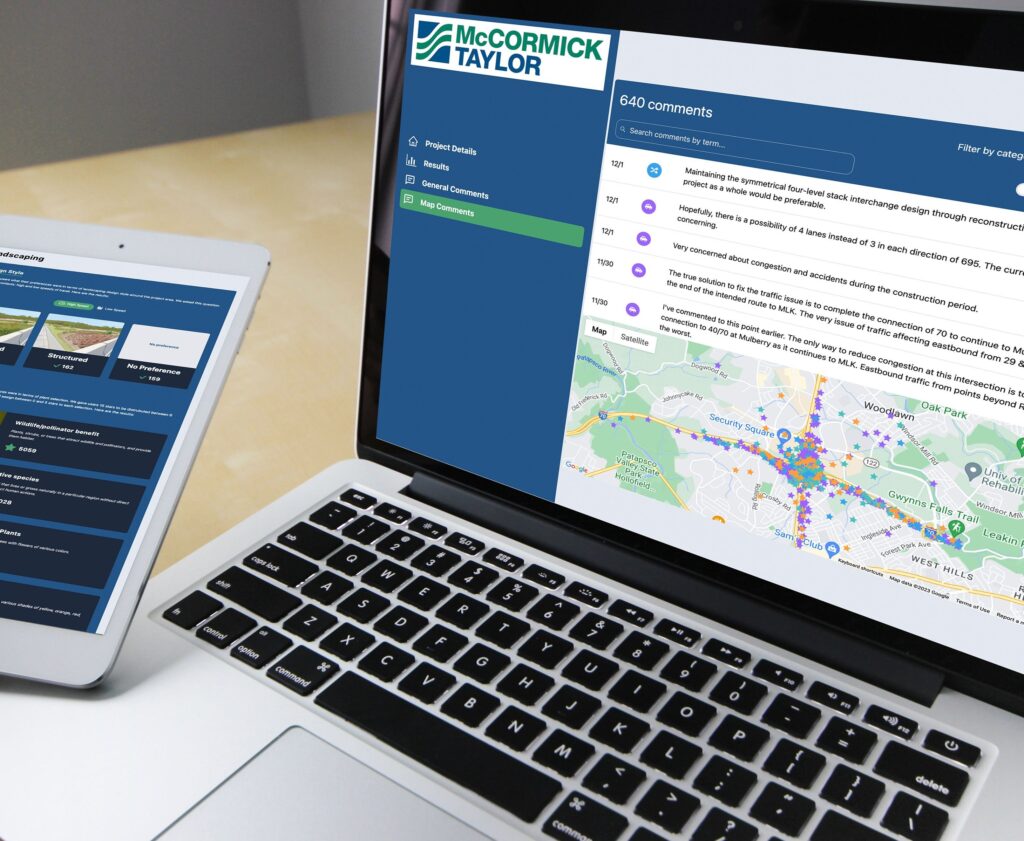
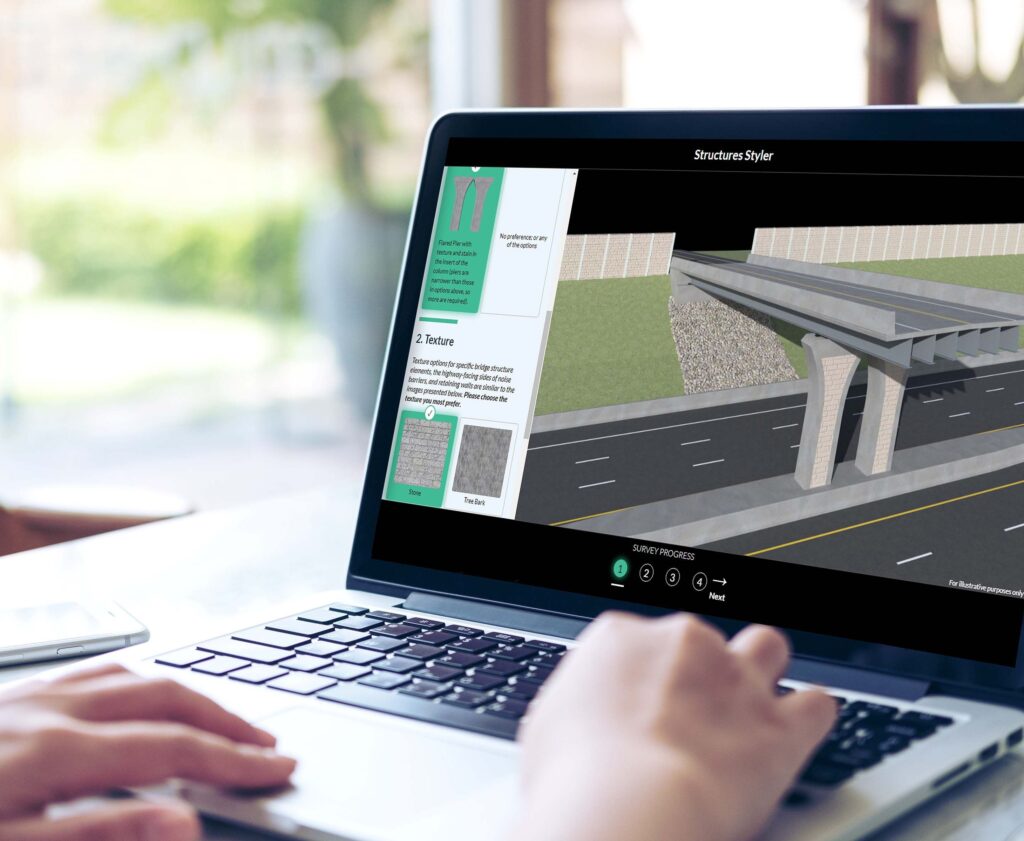
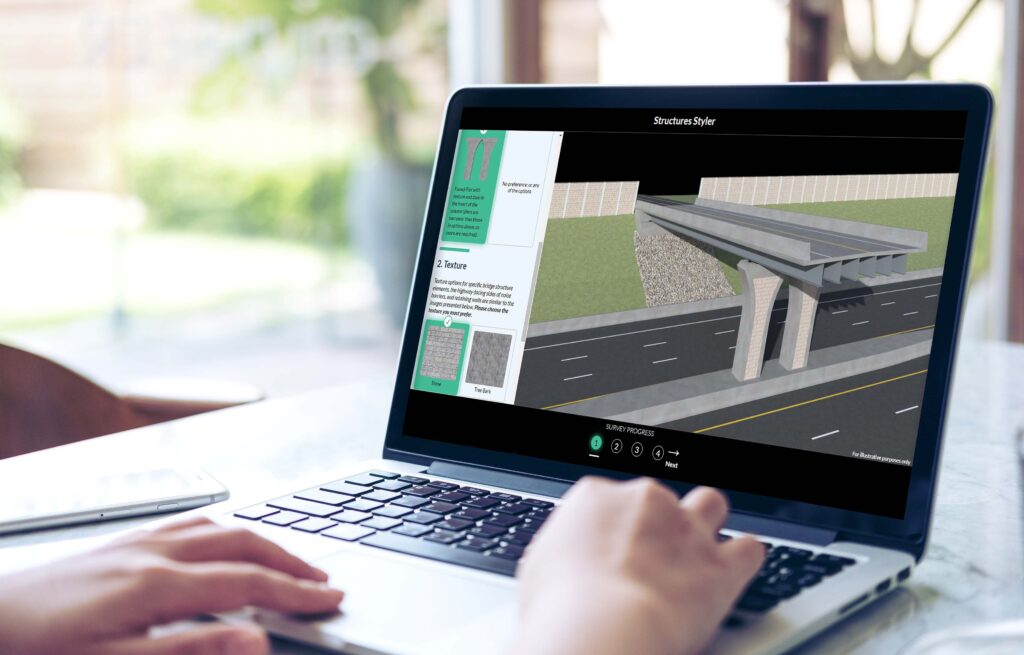
To gather feedback on bridge aesthetics, landscape treatments, and community concerns, McCormick Taylor designed and delivered a custom multilingual survey application that went far beyond a traditional online survey. The interactive platform featured a 3D bridge builder tool that allowed participants to customize bridge elements, including pier types, concrete textures, and stain colors, while viewing changes in real time. Participants could then rank landscape preferences using a visual star-rating system and provide location-specific feedback through an interactive mapping tool that enabled users to pin comments to areas of concern or appreciation within the project corridor.
Accessibility was a key project priority. Survey materials and instructions were provided in multiple languages, and the application was fully compatible with screen readers and keyboard navigation. To promote transparency and informed decision-making, McCormick Taylor also developed a private stakeholder dashboard that visualized survey participation metrics and public sentiment through interactive charts and graphs.
Project services included project management, EJ analysis and mapping, public involvement planning, stakeholder and elected official coordination, website and video development, graphic design and visualization support, geofencing survey development, interactive web mapping, virtual public involvement, custom survey and dashboard development, mailing list management, and preparation of the final public engagement report.
Results
By integrating equity-focused outreach, innovative technology, and accessible engagement practices, McCormick Taylor successfully expanded public participation and captured meaningful community input throughout the project. The custom survey platform provided stakeholders with actionable insights into public preferences related to bridge aesthetics, landscaping, safety, and environmental concerns, while the transparent reporting tools helped build understanding and trust among project partners and the community. This comprehensive approach ensured that public feedback played a meaningful role in shaping the future of one of Maryland’s most important transportation interchanges.