Replacement of the Rudolph-Arthur Covered Bridge (#26)
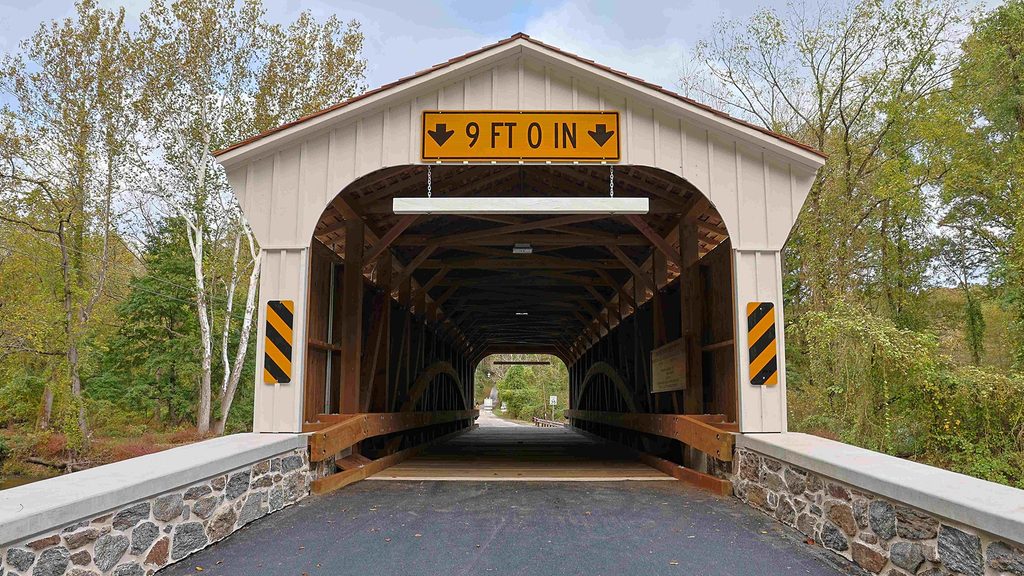
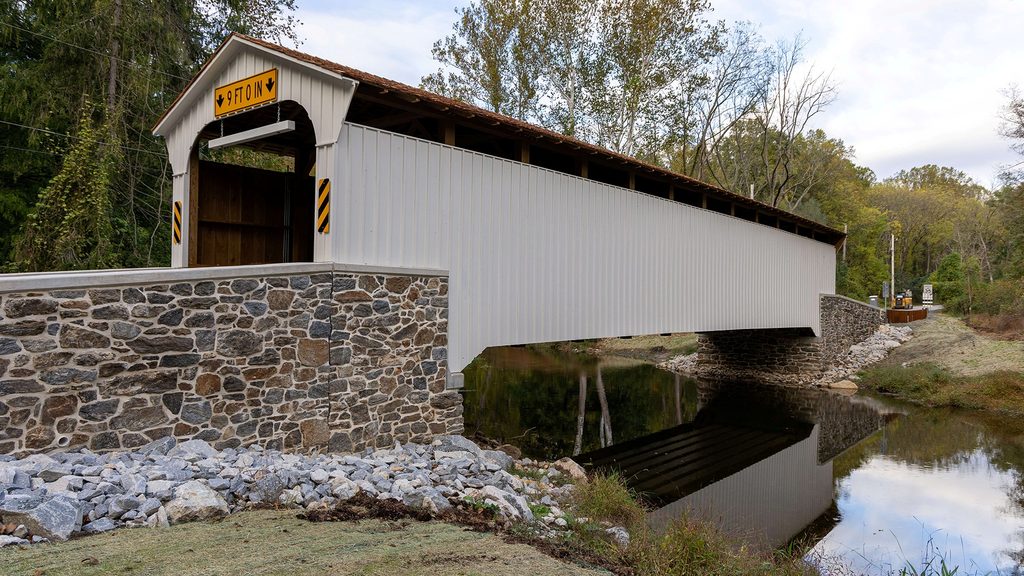
McCormick Taylor worked extensively with Chester County to deliver a new Rudolph-Arthur Covered bridge after the remnants of Hurricane Ida destroyed the historic structure.
The Challenge
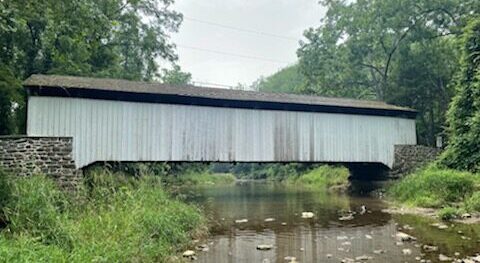
Originally constructed in 1880, the single-span, Timber Burr Arch Truss bridge was a cherished landmark and vital local connection between the townships of Elk and New London, PA. The bridge’s 3-ton weight restriction limited emergency access and compromised safety. Inspection reports revealed extensive timber deterioration as well as sagging of the trusses and minor scour at the stone masonry abutments.
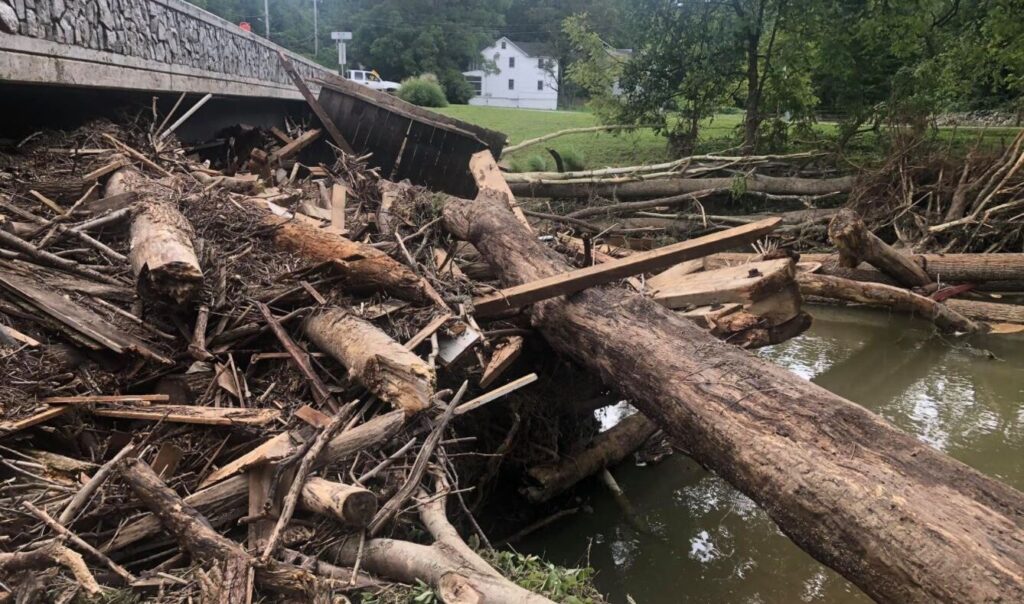
McCormick Taylor, as prime consultant, began the project as a rehabilitation to preserve the bridge’s historic character while ensuring long-term structural integrity and safety. Sadly, when the design was nearing completion, and just months from construction, storms resulting from Hurricane Ida caused devastating floodwaters that swept the entire bridge away from its stone masonry abutments. Following destruction of the bridge, the County reached out to the local municipalities to gauge interest in replicating the old bridge and was met with resounding requests to restore the crossing to its original appearance.
How we Helped
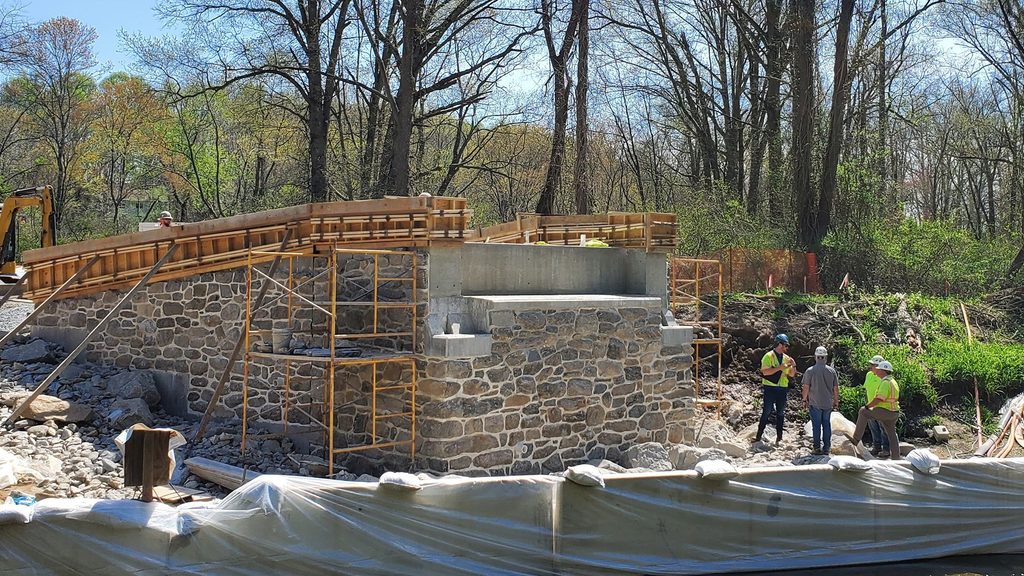
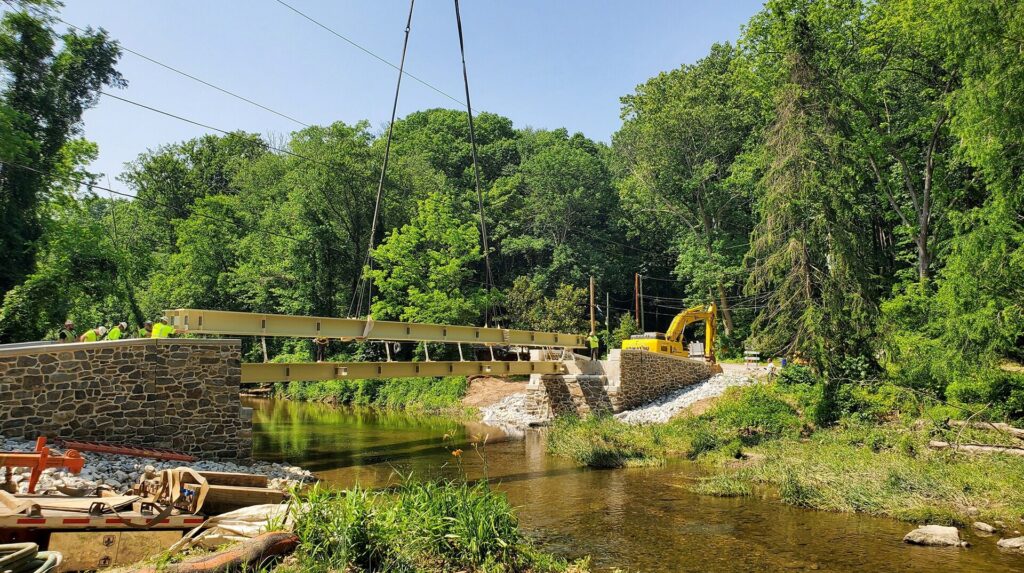
McCormick Taylor worked closely with its structural subconsultant and Chester County to develop a bridge design that replicates the original structure’s appearance while meeting modern traffic load requirements. To do so, McCormick Taylor provided a range of services, including project management, roadway and safety engineering, environmental permitting, plan preparation, cultural resource coordination, utility relocation, extensive right-of-way coordination, co-management of Section 106 requirements, and construction consultation and management services.
The resulting design carefully considered precise tolerances between old and new elements to preserve the original dimensions. Reflection and study guided the design, using detailed inspection reports, field measurements, surveys, and photographs to ensure a historically accurate replication with period appropriate materials and techniques, since the original timber superstructure no longer existed.
The Result
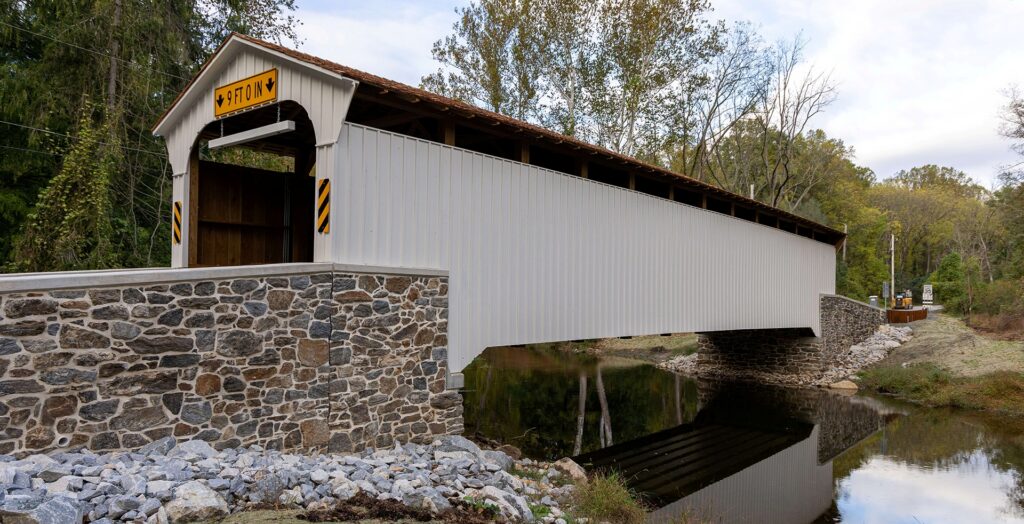
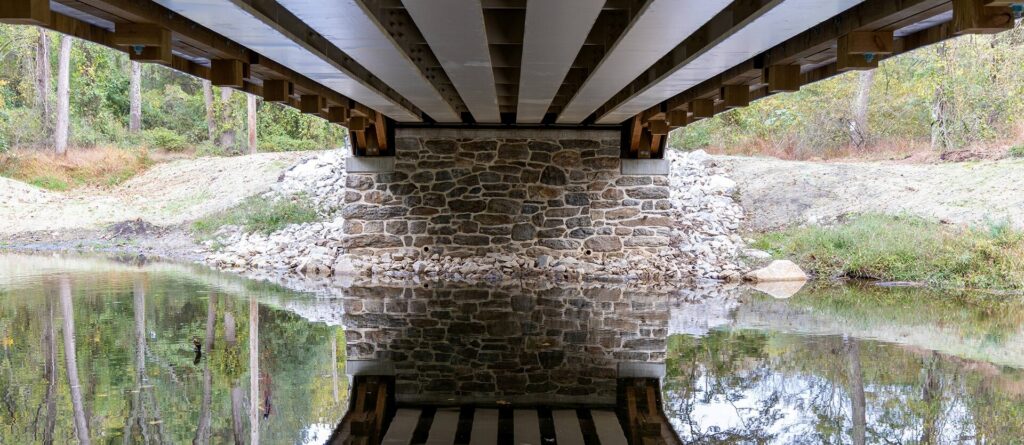
The new structure consists of a steel multi-beam bridge supported by reinforced concrete yet retains the traditional appearance of a timber-covered bridge with stone masonry abutments. The bridge is an elegant example of old and new technologies complementing each other to provide a link that transports present-day users to their destinations while evoking an earlier time that was simpler and less hurried. This beautiful new bridge will support routine and emergency services to residents and local businesses for future generations while preserving an important piece of local history.
Awards
- ASHE First State, Honorable Mention, Project of the Year
 ASHE First State, Honorable Mention, Project of the Year