Spring Branch Community Restoration Project
McCormick Taylor restored Spring Branch and its floodplain to improve environmental conditions, reduce flood impacts, and create a connected greenway for residents and local schools.
The Challenge
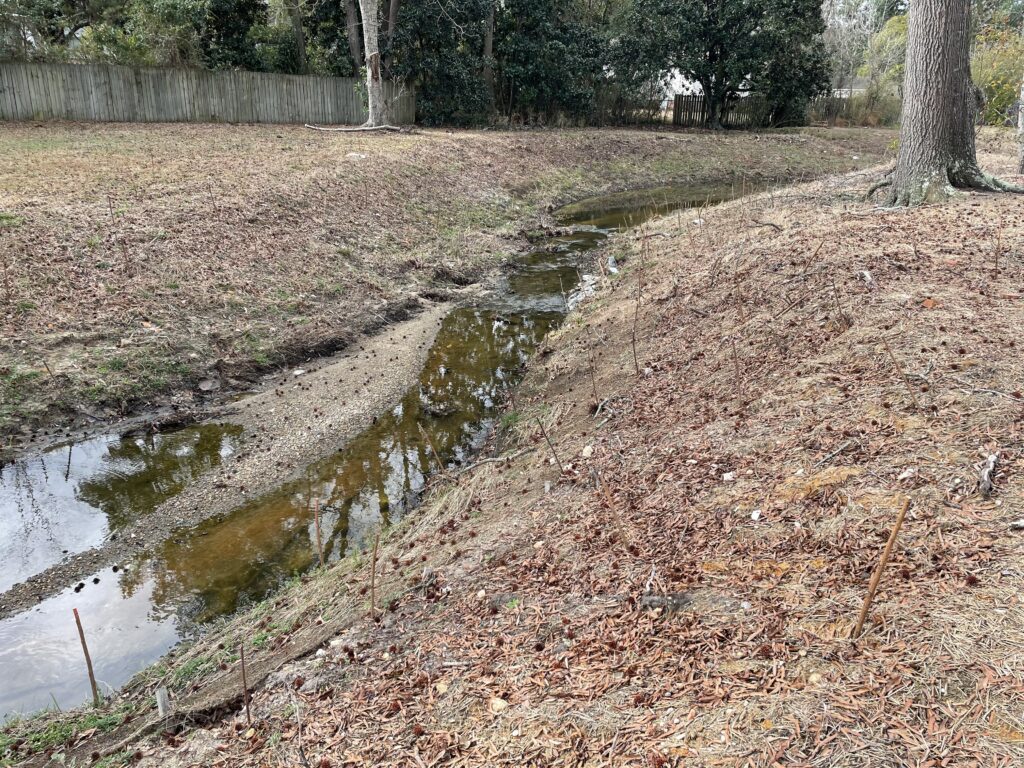
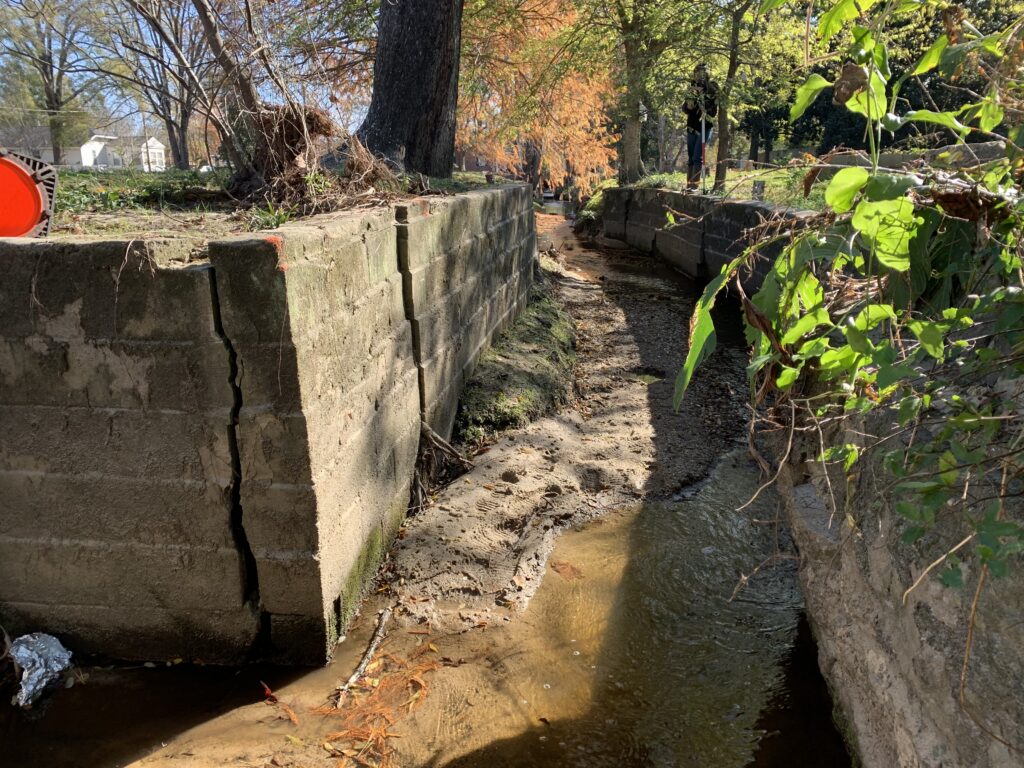
The Spring Branch corridor between 5th and 6th Streets presented significant flooding hazards and public safety risks. The stream was constrained by failing cinder block walls, some leaning over the channel and at risk of collapse, which could have created a blockage, effectively forming a dam and causing severe flooding in the adjacent neighborhood.
An undersized culvert at 5th Street further exacerbated flood risk during heavy rainfall events. The site also contained multiple abandoned home foundations that complicated construction logistics and posed additional safety concerns. Beyond these structural issues, the stream corridor suffered from degraded habitat, limited floodplain connectivity, nutrient loading to the Neuse River, and disconnected community infrastructure.
To address these challenges, the Town established several project goals: provide flood attenuation, reduce nutrient pollution to the Neuse River, reconnect the stream to its floodplain, enhance the riparian buffer, improve benthic and fish habitat, and create a natural resource with greenway connectivity and educational opportunities.
The project also needed to preserve and integrate the existing 5th Street Community Garden while planning for future trail connectivity between Johnston County Community College and Downtown Smithfield.
How We Helped
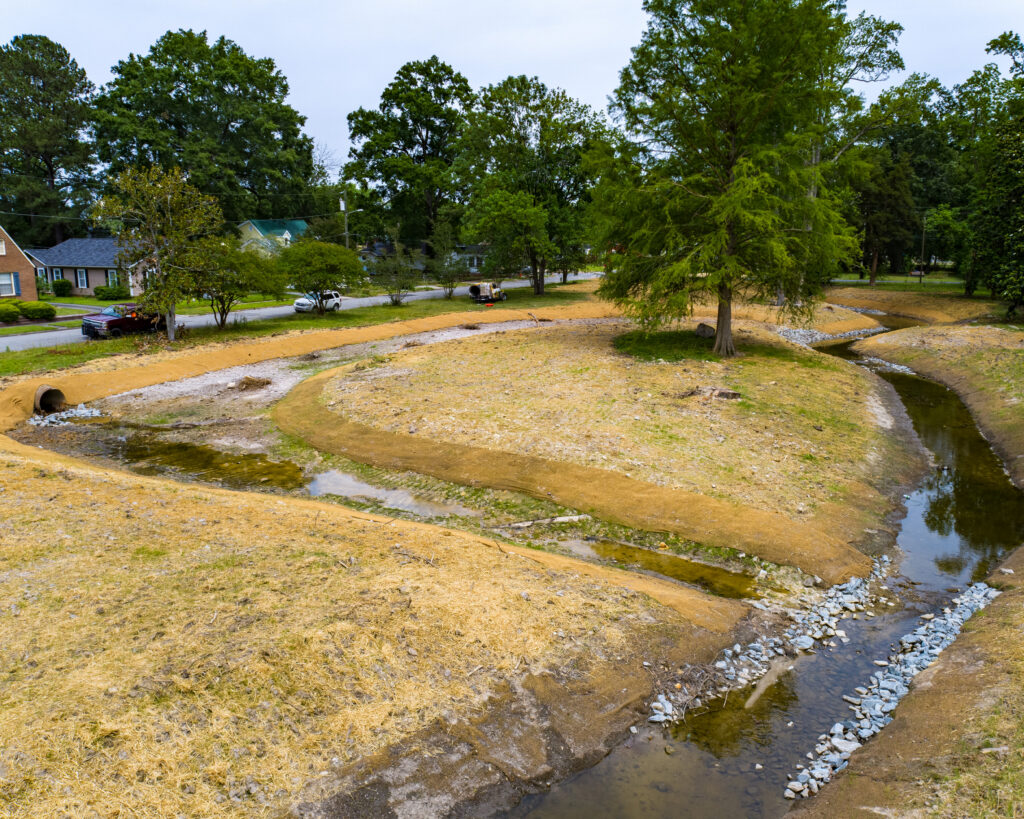
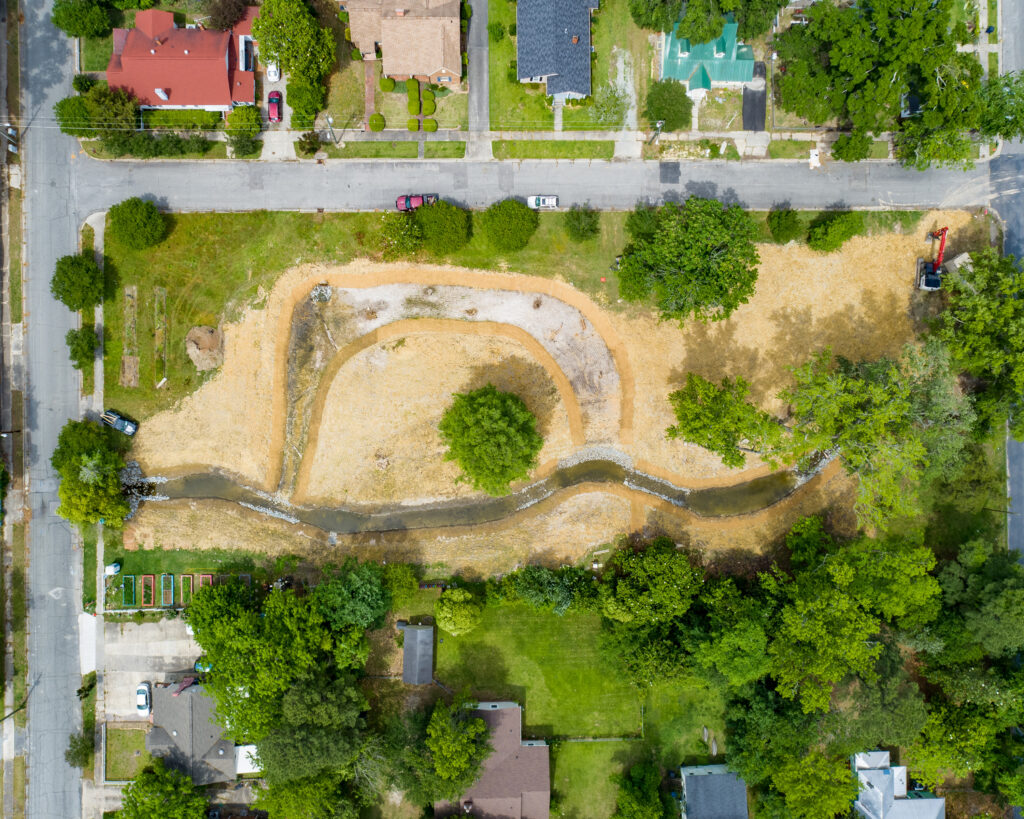
McCormick Taylor developed an innovative restoration design that extended beyond traditional stream stabilization approaches. A defining feature of the project was the creation of an overland flow area, an uncommon element in stream restoration, that significantly increased flood storage capacity and reduced pressure on the undersized 5th Street culvert. The project also daylighted approximately 100 linear feet of tributary, expanded overall stream length, and created approximately 0.5 acres of floodplain wetland, resulting in a more resilient and ecologically functional corridor.
The design incorporated numerous integrated elements to enhance both environmental performance and community value. These included tributary daylighting to expand channel capacity, floodplain reconnection and protection, creation of a headwater stream and wetland complex, installation of in-stream structures and natural gravel substrate to enhance aquatic habitat, riparian buffer enhancement and tree preservation, and removal of hazardous cinder block channel walls. The project will also integrated a greenway with pedestrian bridges and future educational placards, preserved and relocated raised beds from the community garden, and established an easement prohibiting future development within the restored corridor to ensure long-term protection.
Because the project required significant excavation, McCormick Taylor worked closely with the Town, contractor and local construction companies to identify beneficial reuse opportunities for excavated fill, reducing hauling costs and maximizing overall budget efficiency. The conceptual design was presented at a public meeting to gather input from residents, allowing the community to voice concerns and provide feedback. This engagement process ensured the final design addressed technical challenges while reflecting community priorities and future use plans.
Results
The Spring Branch Community Restoration Project delivered measurable environmental, safety, and community benefits. Flood resilience and water quality were improved through tributary daylighting and the creation of an overland flow area, which increased channel capacity, enhanced flood attenuation, reduced stress on undersized infrastructure, and improved nutrient retention. The project created approximately 0.5 acres of floodplain wetland and installed in-stream structures to enhance aquatic habitat, while removal of unstable cinder block walls significantly improved public safety and reduced flood risk.