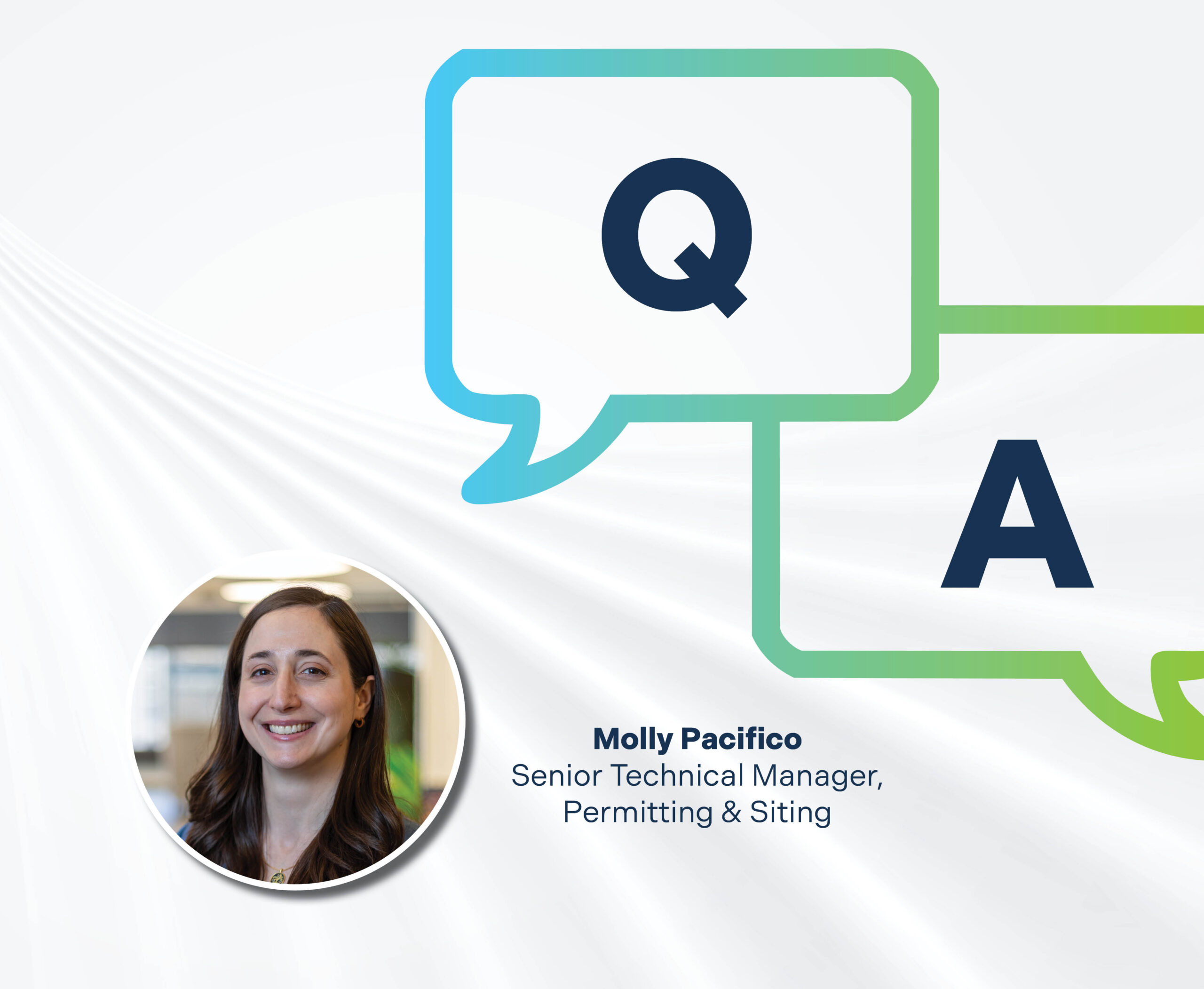
McCormick Taylor has demonstrated proficiency in effectively navigating and upholding environmental compliance throughout the development of major infrastructure projects. Successfully managing the intricacies of state and federal environmental regulations is a complex endeavor, and McCormick Taylor’s expertise in this area ensures the seamless planning and permitting of maintenance and construction activities during project development. These projects are a priority for our clients, and any issues encountered during the environmental planning and permitting processes can delay much-needed improvements and upgrades. To learn more about the challenges associated with regulatory compliance certifications that we encounter in our energy market, we sat down with Molly Pacifico, a Senior Technical Manager of Permitting and Siting in our Philadelphia office.
What is the Certificate of Public Convenience and Necessity (CPCN)? What types of projects require an application for one to be filed?
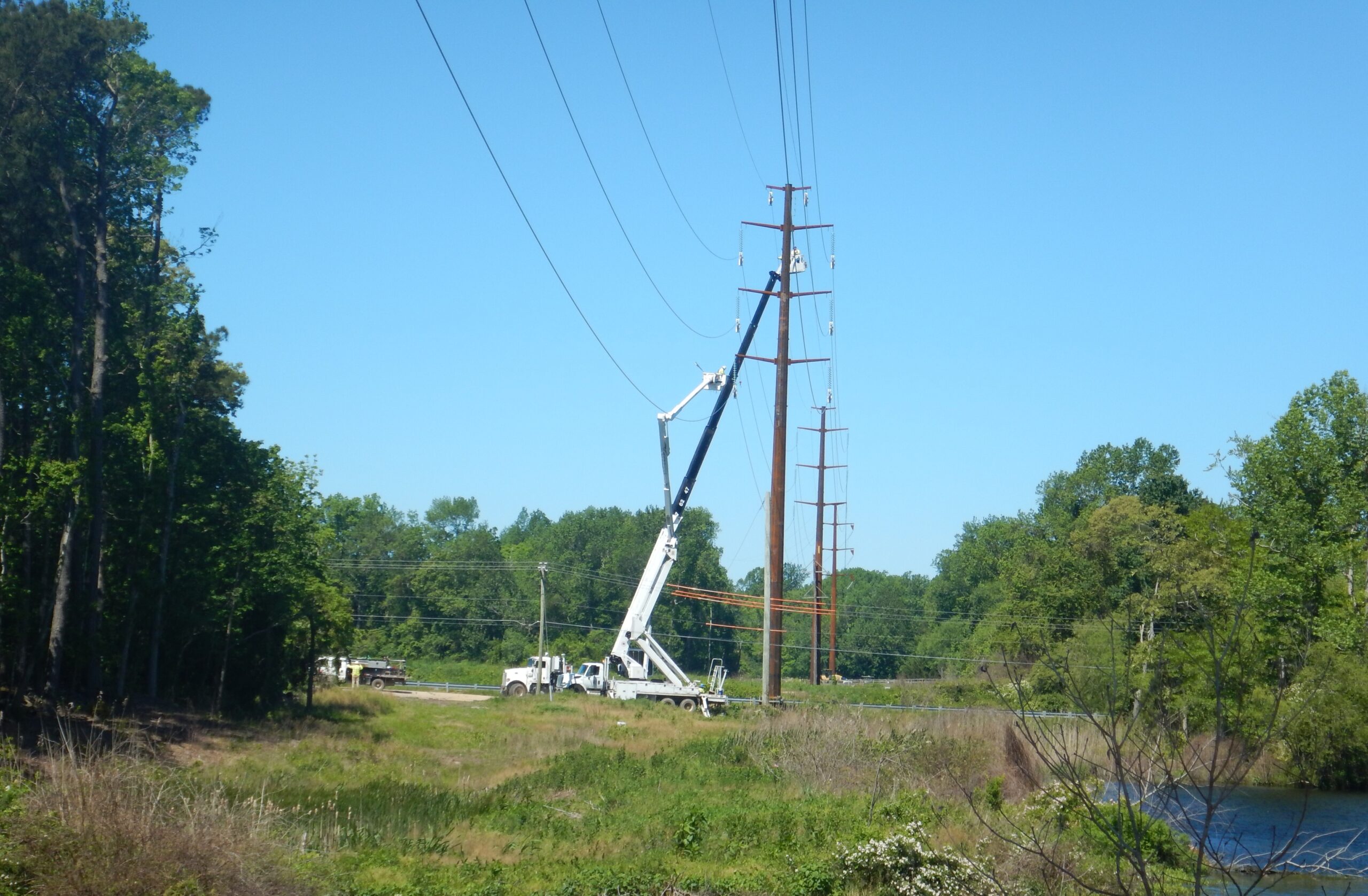
In general, a CPCN is a type of regulatory compliance certification for public service industries, specifically in this case, public utilities. It is a tool for utility regulators to ensure that large infrastructure projects are in the public’s best interest. The types of projects that require a CPCN and the entity issuing them can vary from state to state. For example, in Maryland, CPCNs are issued by the Maryland Public Service Commission (PSC) and are required prior to the construction of “a generating station, a qualified lead line, a transmission line designed to carry more than 69kV, or a qualified submerged renewable energy line.”
In Virginia, CPCNs are issued by the State Corporation Commission (SCC) and are typically required prior to the construction and operation of transmission lines and/or facilities greater than 115kV.
What other factors need to be considered to determine if a project requires a CPCN?
In Maryland specifically, construction includes both new lines and modifications to existing lines; therefore, even a rebuild of an existing transmission line greater than 69kV may still require a CPCN. In some cases, the PSC may waive the requirement for full CPCN application. Previously, there were clear guidelines for instances where the PSC should waive (also referred to as a “mandatory” waiver) these requirements; however, that will no longer be the case as of July 1, 2026, when provisions of Maryland House Bill 1532 (HB1532) the Utility RELIEF Act relevant to the CPCN process go into effect. This new statute repeals the requirement for mandatory waivers and leaves it entirely up to the PSC’s discretion (also referred to as “good cause”). Per the new statute, some factors that must be considered by the PSC when determining good cause for a waiver include alternatives, advanced transmission technology, cost, and the extent of new facilities.
In addition to revisions to the waiver requirements, the new statute under HB1532 also removes references specific to “overhead” transmission lines, expanding the applicability to underground transmission lines as well.
What states does McCormick Taylor have CPCN experience in?
Mid-Atlantic and the southeast, with CPCN experience in Maryland, Pennsylvania and Virginia.
What regulatory agencies are typically involved with the CPCN process?
Generally, it is the state utility commissions that are responsible for the CPCN process in each state.
In Maryland, the main agencies involved in the CPCN process are the PSC, the Maryland Department of Natural Resources Power Plant Research Program (PPRP), and the Office of People’s Counsel (OPC). Additional agencies that provide comments and other approvals throughout the process may include the Maryland Department of the Environment, Maryland Department of Natural Resources, Maryland Historical Trust, the Critical Area Commission, U.S. Army Corps of Engineers, as well as other various state, local, and federal agencies, as applicable.
In Virginia, the main agencies involved in the PCN process are the SCC and the Virginia Department of Environmental Quality (DEQ). Additional agencies which provide comments and other approvals throughout the process may include the Virginia Department of Game and Inland Fisheries, Department of Conservation and Recreation, the Marine Resources Commission, US Army Corps of Engineers, as well as other various state, local, and federal agencies, as applicable.
Managing the multiple concurrent permitting requirements for projects that require a CPCN is key to a project’s success. This includes coordination at the local/County permitting level, as well. There are many related and often interdependent elements to each permit that require extensive coordination and collaboration between all stakeholders to maintain consistency and stay on track to work towards the required approvals.
What is typically the most challenging part of preparing a CPCN application?
I would say preparing the environmental analysis and documentation is one of the most challenging parts. In Maryland, this is the Environmental Review Document (ERD). As part of the CPCN application, a complete environmental analysis is required. This document summarizes the existing physical, biological, aesthetic, and cultural features of the project area, as well as the potential environmental and socioeconomic effects of a project. This analysis is prepared in the form of the ERD and requires a lot of research, field surveys, and input from multiple technical backgrounds. We typically have a whole team of people working on different sections of the document, each bringing their own knowledge and perspective to the table. Because of this, it is important to make sure the document flows in one cohesive voice in the end. However, it’s a great way to get multiple people/groups involved in one project and really exemplifies the power of good teamwork!
How can McCormick Taylor help clients file for their projects’ CPCN?
McCormick Taylor has experience with the preparation of ERDs, development of the CPCN application and expert witness Testimony, preparation of pre-filing consultation and Notice of Filing, and providing support throughout the entire CPCN review process by responding to data requests and attending the public and evidentiary hearings. Additionally, our existing relationships with the agencies involved enable us to have a thorough understanding of the process as well as the ability to resolve any concerns that may arise with ease.
What types of tasks typically must be completed before a client owner can file their CPCN application?
McCormick Taylor’s experience has given us a clear understanding of the requirements as well as the expectations based upon lessons learned from recent filings and proceedings. With this experience we are able to inform our clients of the key steps that must be completed before the client can file their CPCN application, including:
- Finalize the preliminary design (typically 30% to 60% for filing) and determine construction techniques
- Complete early agency consultation and conduct field studies
- Determine if the project potentially qualifies for a discretionary waiver
- Consider methods for avoidance and minimization of impacts and conduct an Alternatives Routing Analysis and review of other project alternatives (i.e. advanced transmission technologies, batteries, etc.)
- Finalize costs (based on current design phase at the time of filing)
- Attend the Joint Agency Evaluation Meeting to get early input from agency representatives
- Attend a pre-application meeting with the relevant agency representatives
- Evaluate environmental and socioeconomic impacts, prepare the ERD and other application pieces
- Complete required stakeholder outreach
Why is public involvement so important for this process?
As the challenge of developing infrastructure in our region and country as a whole continues to grow, the public involvement process is often key to the success of a project.
Our clients conduct a variety of public involvement and engagement measures to reach community members and other stakeholders early on in the project development. This often occurs before the official CPCN process begins. McCormick Taylor supports our clients through this process.
In Maryland, new requirements have been established for enhanced public notice ahead of CPCN filings. These include providing notice of right to intervene on the project to the communities.
Public hearings are the official opportunities for the voices of various stakeholders and community members to be heard. Often there is potential for pushback from adjacent landowners and the public at these hearings, especially if the project has a lot of environmental and/or socioeconomic impacts. However, a good way to avoid this potential issue is to get ahead of it by reaching out to the public/surrounding communities early on. Holding public outreach meetings in the beginning stages of project development is a great way to address potential issues head-on and avoid backlash during public hearings, which have the potential to delay your permit approval process.
How do you keep up with the ever-changing regulatory environment?
At McCormick Taylor, amongst our permitting and sitting team we will split up responsibility to track proposed and pending legislation and regulatory changes that could impact our clients and their projects. We do this through attending events, reviewing news/guidance documents published by the agencies and through our relationships with the regulators. Recent examples of this include the changes to the Maryland requirements and we have been able to support our clients in navigating these changes.
For more information about McCormick Taylor’s planning, permitting, and licensing experience in the Energy Market contact Molly Pacifico or Ben Morrow.